

How to say no without feeling guilty
How to say no without feeling guilty
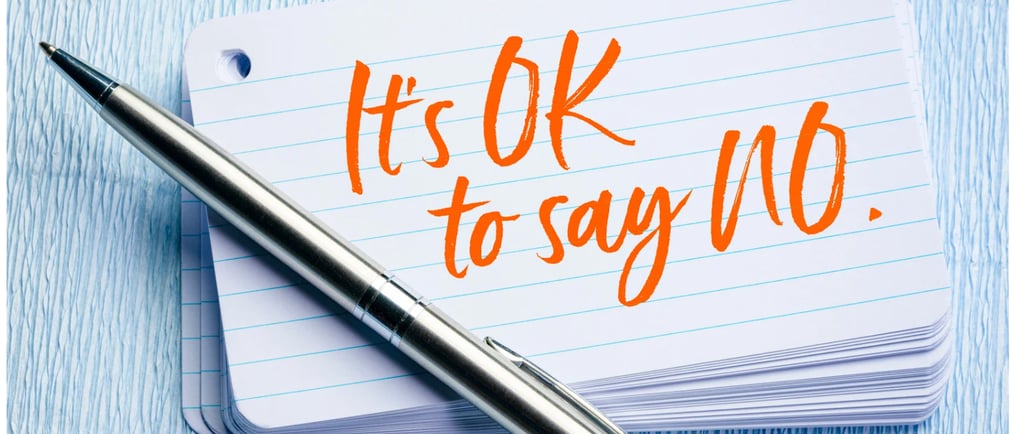
Saying “no” is one of the most liberating skills — and also one of the hardest to learn.
Why is it so difficult?
Many of us learned that saying “yes” means being good and loved, while saying “no” means risking disappointment or rejection. It is possible to say “no” kindly while still respecting your own boundaries.
Studies on attachment theory and boundary psychology show that difficulty saying no is often linked to people-pleasing patterns and low internal self-esteem.
Saying yes when you want to say no generates resentment and exhaustion. Learning to say no protects your energy and allows for healthier, more respectful relationships.
Concrete benefits
Greater self-esteem and sense of control over your life
Reduction in stress and resentment
More authentic relationships
More time and energy for what truly matters
How to learn to say no
Start with small “no’s” in low-risk situations.
Use kind but clear phrases: “Thank you, but I can’t”, “This isn’t a good time for me”.
Observe the guilt without acting on it (it’s normal at the beginning).
Remember: “Saying no to others often means saying yes to myself.”
Conclusion
Saying no does not make you selfish. It makes you a person who respects themselves. It is an act of care toward yourself and, paradoxically, also toward others.
If you want to work on boundaries and guilt, I am here to help you. The first consultation is free.